
Prototype Injection Molding vs Production: Key Differences and How to Choose
Moving a plastic part from an idea to a shelf usually runs through two very different processes. Prototype injection molding exists to test and refine
DISCOVER OUR NEWLY RELEASED COLLECTIBLE DISPLAY CASES! SHOP NOW
Shop by brand & type
UV-filtering display cases that guard collectibles, documents, and retail goods against sun damage and discoloration.
Browse UV-protected cases →Display cases packaged for retail shelves — clamshell, boxed, and custom-printed options ready to scan and sell.
Browse retail-ready cases →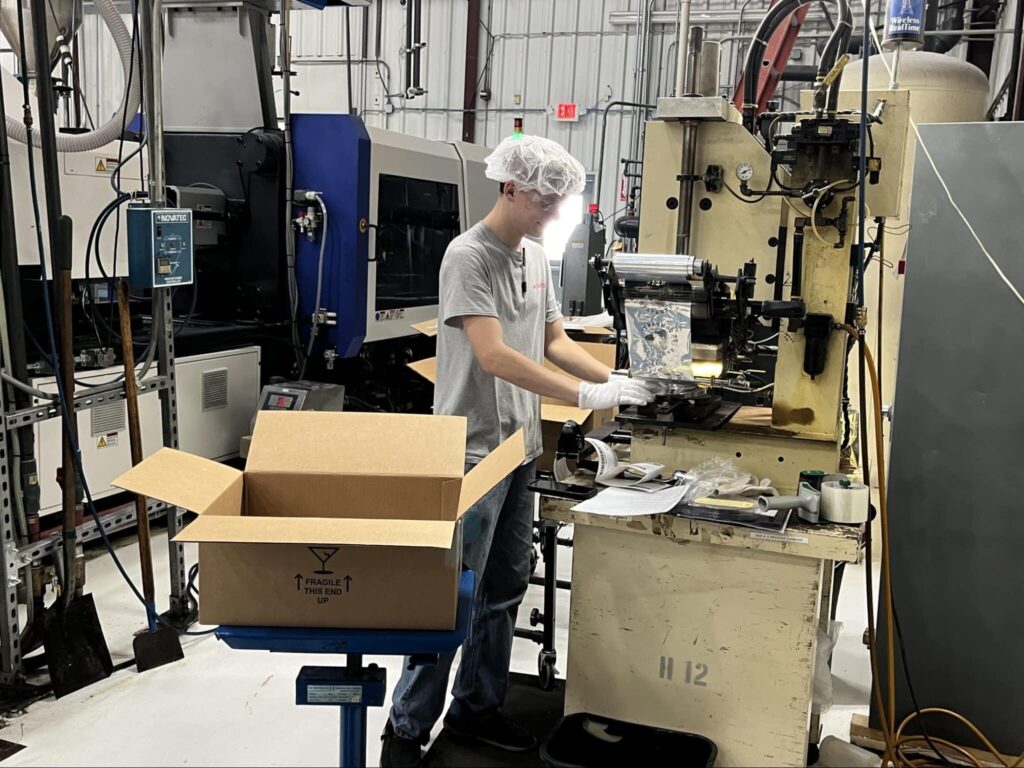
A molded part is rarely a finished product. Many parts still need to be joined, decorated, kitted, or packaged before they can ship, and every one of those steps is a sourcing decision. This guide covers secondary operations in injection molding from the buyer’s side. It explains what each one does, what to ask a molder, and when keeping them with one partner helps or adds risk.
Secondary operations in injection molding are the manufacturing steps performed on a plastic part after it leaves the mold. They join parts together, add graphics, labels, or markings, and assemble and package the product so it arrives ready to use or sell.
Most secondary operations fall into three groups:
Some steps can be designed into the mold instead. Insert molding, for example, eliminates the need for a separate insert installation step. For definitions of each process, see our overview of additional services used with custom injection molding. This guide focuses on the sourcing decision.
The table below summarizes the secondary operations covered in this guide: what each one does, when it is a good fit, and the question to ask a molder before you commit.
| Operation | What it does | Good fit when | Ask your molder |
|---|---|---|---|
| Ultrasonic welding | Joins thermoplastic molded parts using mechanical vibrations, usually at 20 or 40 kHz, that soften or melt the material at the joint line; welds typically take under one second | Two molded thermoplastic parts must be permanently joined at volume without fasteners or adhesives | Is the joint designed for ultrasonic welding before the tool is cut? Is welding done in-house? |
| Hot stamping | Dry process: a heated die presses foil onto the part; the image is in the die and a solid-color foil is generally used; ready to handle or package immediately | Logos, markings, or metallic accents on thermoplastic parts; the only dry process for bright gold and silver metallic finishes | Vertical or roll-on? Where is the graphic on the part? |
| Vertical vs. roll-on hot stamping | As a general rule, vertical machines can apply graphics up to 90 degrees of a part’s circumference; roll-on equipment is used for large-area applications | Flat or slightly curved areas (vertical); large-area graphics (roll-on) | Which machine type fits my part geometry? |
| Heat transfer | Dry process: a pre-printed image on a carrier is transferred to the part with heat, time, and pressure; multi-color art can be inspected before application | Multi-color graphics with tight registration | Is art printed and inspected before transfer? |
| Pad printing | A silicone pad picks up a 2-D image and transfers it onto 3-D surfaces, including curved, textured, concave, or convex areas | Detailed images on irregular shapes | Is the decoration area accessible to a pad?Is pad printing in-house or through a managed partner? |
| Label application | Applies pre-printed labels to finished parts | Markings, branding, or product information that a label carries more simply than direct decoration | Is labeling in-house or through a managed partner? |
| Blister packing | Packages parts for retail (Pioneer Plastics: blister pack machine) | Retail-ready packaging | Can packaging ship direct to retail? |
| Assembly, kitting, packaging | Combines, kits, shrink wraps,and packages parts for shipment | Multi-part products or direct-to-retail programs | Which steps are in-house and which go to managed partners? |
Every time a part moves from one vendor to another, it picks up another shipment, another production queue, another incoming inspection, and another party who can dispute responsibility. None of those costs appears in the piece price, which is why comparing quotes on piece price alone can mislead.
Consider a part that is molded, decorated, assembled, and packaged by four different companies. The handoff map below compares that chain with one partner managing the same steps.
| Cost or risk | Four separate vendors | One accountable partner |
|---|---|---|
| Freight | Parts are packed and shipped between each company before the product reaches you. | Steps done in the molder’s own facility need no freight between them. The partner coordinates any step it sends to a managed partner. |
| Lead time | Each vendor has its own queue. A delay at one stop pushes back every stop after it. | One production schedule covers molding and secondary work. |
| Inspection | Parts should be inspected again each time they change hands. A defect found several stops later can be hard to trace. | One quality system follows the part from the press to the package. |
| Accountability | When a decorated or assembled part fails, each vendor can point to the one before it. | One supplier answers for the finished result. |
The stakes are larger than a freight invoice. On average, the supply chain accounts for more than half of what a manufacturer spends, and late materials can disrupt schedules, stop work, and lead to missed customer shipments. That is why procurement teams weigh total cost of ownership, which counts the costs beyond purchase price.
Pioneer Plastics handles secondary work on custom plastic parts programs “in-house or through managed partners,” which gives the buyer one accountable supplier instead of a chain of vendors. That qualifier matters at any molder, so ask which steps happen in the building. Pioneer Plastics also maintains an ISO 9001:2015 certified quality management system, and our guide to in-house quality control in injection molding explains what to verify.
Ultrasonic welding joins thermoplastic molded parts with mechanical vibrations above the audible range, usually at 20 or 40 kHz. A horn delivers the vibrations, which soften or melt the plastic at the joint line. Weld times are typically less than one second, which makes the process well suited to mass production.
As our additional services overview notes, ultrasonic welding uses no bolts or adhesives, so there is no added hardware to buy, stock, or install. TWI guidance identifies three factors that govern whether a part welds successfully:
The third factor is the one a buyer controls. Joint features are part of the molded geometry, so settle them before the tool is cut. Pioneer Plastics runs 1000-watt ultrasonic welders and designs parts with the end use and assembly in mind.
Hot stamping, heat transfer, and pad printing all put graphics on a molded part, but they fit different jobs. Hot stamping suits single-color and metallic images, heat transfer suits multi-color artwork, and pad printing suits detailed images on irregular surfaces. The right choice depends on the artwork and the part geometry.
Vertical and roll-on hot stamp machines handle different part geometries, so a molder with both can decorate a wider range of parts. As a general rule, a vertical machine can apply graphics to up to 90 degrees of a part’s circumference. Roll-on equipment is used for large-area applications that could trap air if stamped in a vertical motion.
Pioneer Plastics runs vertical hot stamp machines, horizontal roll-on hot stamp machines, and a heat transfer machine, and can provide pad printing and label application when a program calls for them. For more on the process itself, read our guide to hot stamping injection molded parts.
Packaging and assembly operations turn finished parts into a product that is ready for the shelf or the shipping dock. Assembly combines components into a finished unit, blister packing and shrink wrapping package parts for retail or shipment, and kitting combines multiple parts into one shipment.
At Pioneer Plastics, this group includes:
From there, finished product ships directly to you, your consumers, or your retail partners.
Yes. Consolidating molding and secondary operations with one supplier removes handoff risk but concentrates dependency. If that supplier has a disruption, every step stops at once. Consolidation trades one kind of risk for another, and the dependency side has to be managed on purpose.
Supply chain guidance is blunt on this point. Over-reliance on one supplier for critical parts or materials is a recognized risk, especially when unexpected disruptions hit. Standard risk planning includes lining up backup suppliers and carrying more safety stock.
The same guidance also makes the case for strong, long-term supplier relationships. Angelina Rivera, Supply Chain Group Manager at the NIST Manufacturing Extension Partnership, writes that clear communication and long-term partnerships “can improve the chances of securing on-time deliveries at competitive prices,” with consistent quality. The two ideas are compatible: you can consolidate and still protect the program with four safeguards.
Ask a molder which secondary operations happen in its own building and which go to managed partners. Then ask who inspects the work, and whether your part has been designed for those operations before tooling. Specific answers, backed by an equipment list, tell you more than a general claim that everything happens under one roof.
Use these questions on a supplier call or site visit:
For the full supplier evaluation, use our six-category scorecard for qualifying a US injection molder.
Secondary operations are the steps performed on a plastic part after it leaves the mold: joining, decorating and labeling, and packaging and assembly. Common examples include ultrasonic welding, hot stamping, pad printing, label application, and blister packing. They turn a molded part into a finished, shippable product.
Often, but not automatically. One supplier means fewer shipments, one schedule, one quality system, and one party accountable for the result. It also concentrates risk, so pair consolidation with written tool ownership, clear specifications, and safety stock.
In hot stamping, the graphic is built into the stamping die, and the foil is usually one solid color. In heat transfer, the image is pre-printed on a carrier and then transferred to the part with heat, time, and pressure. Hot stamping fits single-color and metallic graphics, while heat transfer fits multi-color artwork.
It depends on the operation and the part. Hot stamping, for example, is typically performed after the molding cycle is complete, although the part’s material and design can affect how well the graphic adheres. Ultrasonic welding is more tool-dependent, because weld success depends on the design of the components and the joint, and those are molded features. At Pioneer Plastics, our in-house tool and die shop repairs, modifies, and maintains molds.
The fewer times a part changes hands, the fewer places cost and quality problems can hide. If your molded part also needs welding, decoration, or retail packaging, ask every candidate the questions above and compare the answers, not just the piece price.
Ready to see how it would work for your part? Request a quote from Pioneer Plastics, or schedule an in-person or virtual facility tour to see the operation firsthand.
The information provided in this content is for general informational purposes only and should not be considered professional advice. It is advisable to consult with a qualified industry professional before taking any action based on this information. The team at Pioneer Plastics is here to assist you with any questions you may have.
Moving a plastic part from an idea to a shelf usually runs through two very different processes. Prototype injection molding exists to test and refine
The custom injection molding process starts with a conceptualized design and ends with a uniquely manufactured product. If your product needs to be aesthetically pleasing
Finding the perfect display box for your collectibles is essential for preserving, protecting, and showcasing your treasured items. Whether you are a casual collector or