
The Power of Made in USA Manufacturing for Quality Solutions
“Made in USA” manufacturing signifies far more than a simple label—it represents a commitment to quality, local economic growth, and ethical production practices. At its
DISCOVER OUR NEWLY RELEASED COLLECTIBLE DISPLAY CASES! SHOP NOW
Shop by brand & type
UV-filtering display cases that guard collectibles, documents, and retail goods against sun damage and discoloration.
Browse UV-protected cases →Display cases packaged for retail shelves — clamshell, boxed, and custom-printed options ready to scan and sell.
Browse retail-ready cases →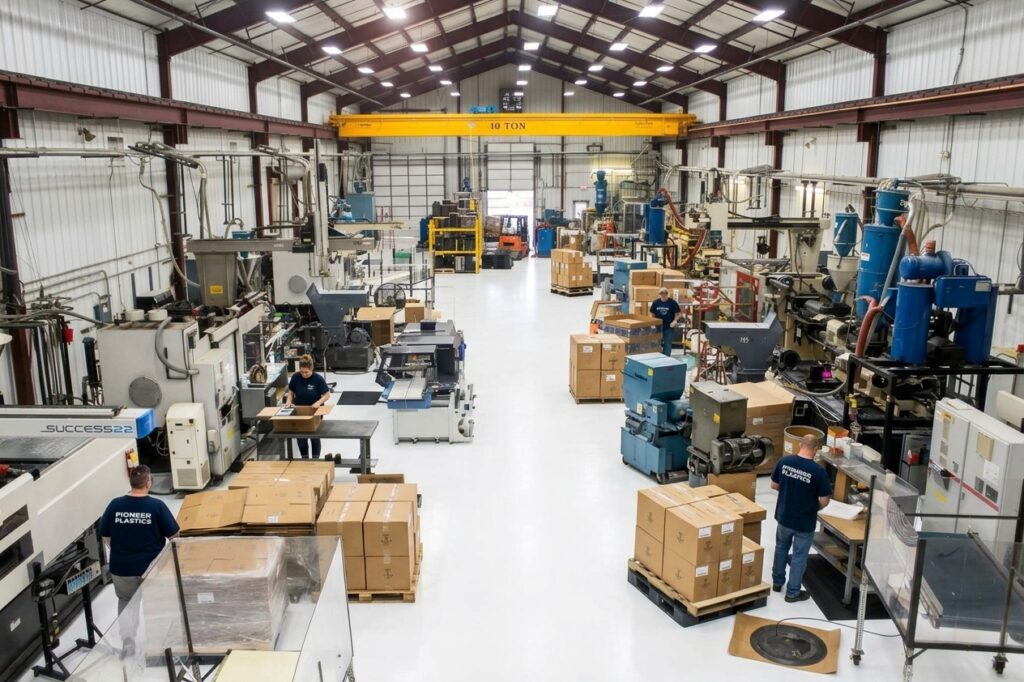
Choosing a new injection molding partner is one of the highest-stakes sourcing decisions a product team makes, because the wrong molder shows up later as missed shipments, failed parts, and tooling you cannot easily move. This guide gives you a practical way to qualify a US injection molder using a six-category scorecard that procurement and engineering can grade a candidate against together. Use it whether you are replacing a supplier, adding a second source, or moving a program back onshore.
Supplier qualification has moved from a back-office checklist to a board-level concern as more US brands shift plastics work onshore. Tariff volatility and reshoring momentum mean buyers are vetting new molders faster, and a rushed evaluation is exactly where the expensive mistakes happen.
The numbers show the shift. US imports of plastic products reached $33.2 billion in 2025, down 12.8% from 2024, as buyers moved volume toward domestic suppliers. Over the same stretch, reshoring and foreign direct investment announced 244,000 US manufacturing jobs in 2024, pulling new molders into buyers’ consideration sets faster than most procurement teams had planned for.
The macro picture is genuinely unsettled. “Tariff impacts are uneven, highly product-specific, and deeply influenced by evolving bilateral negotiations,” the Plastics Industry Association’s chief economist noted in late 2025. For a buyer, that uncertainty is the argument for disciplined evaluation: each program has to be graded against the specific molder you are considering, not waved through on a generic checklist.
To qualify an injection molding supplier, grade the candidate across six categories: capability and capacity, quality systems and certifications, engineering expertise, operational track record, communication and partnership fit, and red flags. Score each category before you compare quotes, because the cheapest quote from a molder that fails on quality or capacity is the most expensive decision you can make.
This scorecard builds on Pioneer Plastics’ broader guidance for hiring an injection molding company by turning what to look for into a category-by-category grade. Use the table below as a shared rubric for procurement and engineering. Grade each candidate against what good looks like, and treat the red-flag column as a set of deal-breakers worth confirming before you sign:
| Category | What to evaluate | What good looks like | Red flag |
| 1. Capability and capacity | Machine tonnage range, shot size, machine count, materials, secondary operations, lead times | Equipment matched to your part; in-house finishing; realistic lead-time commitments | One machine or operator your job depends on; vague capacity answers |
| 2. Quality system and certifications | ISO 9001:2015, industry-specific certifications, IQ/OQ/PQ, PPAP documentation | ISO 9001:2015 minimum plus the certifications your industry requires; documented validation | No formal quality system; cannot produce PPAP or validation records |
| 3. Engineering and process expertise | In-house engineering, DFM support, scientific molding, mold flow analysis, tool maintenance | Engineers who flag part problems early and own tool maintenance | No DFM input; all engineering subcontracted with no accountability |
| 4. Operational track record | Years in business, financial stability, client retention, references, on-time delivery | Decades in business; long client tenures; references that pick up the phone | Will not share references or financials; high customer churn |
| 5. Communication and partnership fit | Single point of contact, response time, quoting transparency, site-visit access | One owner of your account; line-item quotes; welcomes a site visit | Slow RFQ responses; single-number quotes; resists a visit |
| 6. Red flags and risk signals | Single points of failure, hidden charges, mold-ownership terms, documentation gaps | Clear mold-ownership terms; transparent change orders; documented processes | Mold-ownership disputes; surprise change-order fees; evasive answers |
The categories are sequenced from easiest to verify to hardest: equipment fit is binary, while partnership fit only reveals itself over time.
Capability and capacity answer the first question on the scorecard: can this molder actually make your part, at your volume, on your timeline? Confirm the equipment range, materials, secondary operations, and realistic lead times before you spend time on anything else.
Start with the machine list. Ask any candidate molder to confirm:
Pioneer Plastics runs 23 injection molding machines from 75-ton to 1200-ton clamp force in a 100,000 square foot facility, with in-house secondary operations including ultrasonic welding, hot stamping, pad printing, and vacuum forming. A molder with that range can quote a small precision part and a large-format part without shipping half the work to a subcontractor.
The quality system tells you whether the molder can consistently produce parts that meet your specifications. At minimum, look for ISO 9001:2015 certification, plus any industry-specific layers that apply to your program, such as ISO 13485 for medical, IATF 16949 for automotive, AS9100 for aerospace, or a CAGE Code for US government and defense work.
Certifications stack by industry. ISO 9001:2015 is the floor that every serious molder should hold; the rest depend on what you make and the markets you sell into:
| Industry | Certification | What it covers |
| General manufacturing | ISO 9001:2015 | Baseline quality management system every molder should hold |
| Medical devices | ISO 13485 | Quality management specific to medical device production |
| Automotive | IATF 16949 | Quality requirements for automotive production and service parts |
| Aerospace | AS9100 | Quality management for aerospace and aviation parts |
| US government and defense | CAGE Code | Identifies a supplier as eligible for government and defense contracts |
| Defense (controlled data) | ITAR registration | Authorizes handling of export-controlled technical data |
Pioneer Plastics holds ISO 9001:2015 certification and CAGE Code 3U4K8, which lets it take on the government and defense work that uncertified molders cannot.
IQ, OQ, and PQ are the three stages of process validation that prove a molding process produces conforming parts repeatably. Installation Qualification (IQ) confirms the equipment is installed and set up correctly, Operational Qualification (OQ) confirms it runs within defined parameters, and Performance Qualification (PQ) confirms it makes good parts consistently across a production run.
Ask whether the molder can produce PPAP (Production Part Approval Process) documentation and validation records on request. A disciplined molder builds these checks into every stage of production, from incoming material to final inspection, and can defend its quality when an auditor or your own customer asks.
Engineering expertise is what separates a molder that simply runs your tool from a partner that helps you solve a problem in production. Look for an in-house engineering team, Design for Manufacturing (DFM) support, scientific molding capability, and a real mold-maintenance program.
On the scorecard, strong engineering shows up as:
Pioneer Plastics keeps engineering in-house and reviews part designs for moldability before any steel is cut, which is where most avoidable tooling costs get caught.
Operational track record answers whether the molder will still be there in five years and whether it delivers consistently today. Weigh years in business, financial stability, client retention, references, and on-time delivery history.
Client retention is the single most honest signal in this category. A molder that keeps customers for decades is one whose parts show up on time and meet spec, because buyers do not stay with suppliers that fail them. To grade track record, ask for:
Pioneer Plastics has operated as a veteran-owned and family-owned manufacturer since 1986, with customer relationships that run 20 to 30 years and longer. Ask any candidate for documented client work; a molder with real outcomes will point you to them, the way Pioneer Plastics does through its published client case studies.
Communication and partnership fit decide whether you will be able to work with the molder once the quote is signed. Look for a single point of contact, fast and specific responses, transparent line-item quoting, and a willingness to host a site visit.
A few questions surface partnership fit quickly:
A confident manufacturer will walk you through the floor; Pioneer Plastics invites buyers to start that conversation directly.
The biggest red flags when evaluating an injection molder are single points of failure, financial or reference secrecy, hidden change-order charges, slow RFQ responses, mold-ownership disputes, and the absence of a documented quality system. Any one of these is worth pausing on; two or more should usually kill the deal.
Watch for these risk signals during evaluation:
Onboarding a new injection molder typically runs from a few weeks to several months, depending on whether you are transferring an existing tool or building new. Tool transfers and first-article validation (IQ, OQ, PQ) drive most of the timeline. Build a realistic onboarding schedule into your evaluation so you do not open a production gap when you switch.
For programs sensitive to lead time, tariff exposure, communication, or controlled technical data, a US molder usually wins on total cost and risk even when the overseas unit price looks lower. Domestic molders shorten shipping, simplify site visits and audits, and keep your tooling within reach. Overseas can still make sense for very high volumes with stable designs and long lead-time tolerance.
Mold qualification confirms that a specific tool produces good parts. Process validation (IQ, OQ, PQ) confirms that the whole molding process produces good parts repeatably across production. Mold qualification is one piece of the larger validation picture, and a capable molder does both and can show you the records.
Yes, as long as you own the tooling and the transfer is planned carefully. Confirm mold ownership in writing, document the tool’s current condition, and budget time for the new molder to qualify the tool on its own equipment before full production. A disorganized transfer is one of the most common causes of production disruption when switching suppliers, which is why it helps to follow a structured tooling-transfer playbook.
A scorecard turns a gut-feel sourcing decision into a defensible one. Grade every candidate molder across all six categories, weight the ones that matter most to your program, and let the red-flag column do its job. For a reference point on what a fully scored molder looks like, Pioneer Plastics brings ISO 9001:2015 certification, CAGE Code 3U4K8, 23 machines from 75-ton to 1200-ton, and decades of long client relationships to the table.
Ready to put a US molder to the test? Request a quote and a detailed timeline from Pioneer Plastics’ custom injection molding team, and grade the response against the scorecard above.
The information provided in this content is for general informational purposes only and should not be considered professional advice. It is advisable to consult with a qualified industry professional before taking any action based on this information. The team at Pioneer Plastics is here to assist you with any questions you may have.
“Made in USA” manufacturing signifies far more than a simple label—it represents a commitment to quality, local economic growth, and ethical production practices. At its
Choosing a new injection molding partner is one of the highest-stakes sourcing decisions a product team makes, because the wrong molder shows up later as
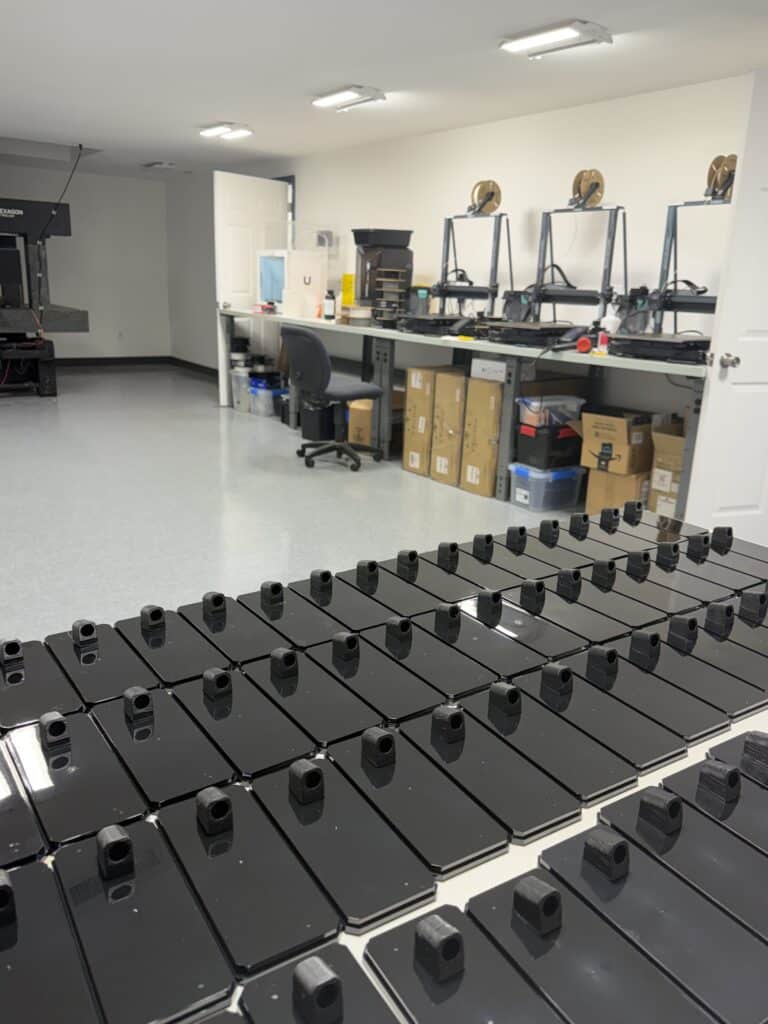
Deciding when to switch from 3D printing to injection molding is one of the most consequential calls in a plastic part’s life, because cutting a