

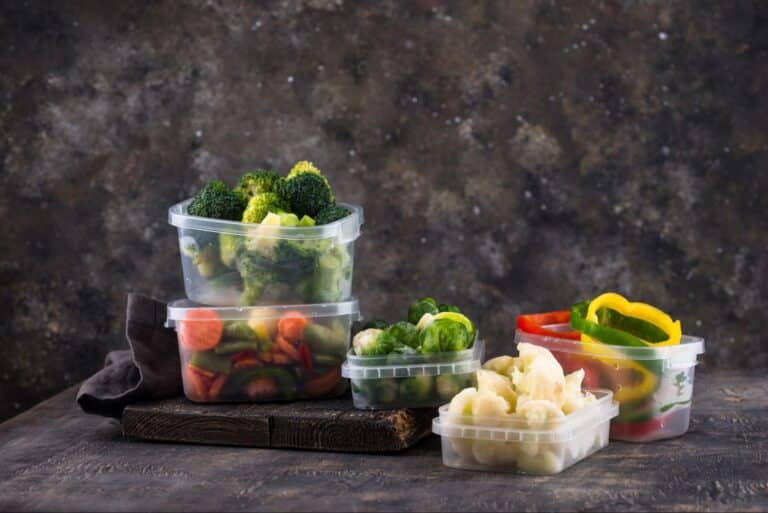
10 Household Products Powered by Injection Molding
Injection molding has drastically changed the way everyday items are produced. The process involves melting plastic pellets and injecting them into custom molds to create
DISCOVER OUR NEWLY RELEASED COLLECTIBLE DISPLAY CASES! SHOP NOW
Shop by brand & type
UV-filtering display cases that guard collectibles, documents, and retail goods against sun damage and discoloration.
Browse UV-protected cases →Display cases packaged for retail shelves — clamshell, boxed, and custom-printed options ready to scan and sell.
Browse retail-ready cases →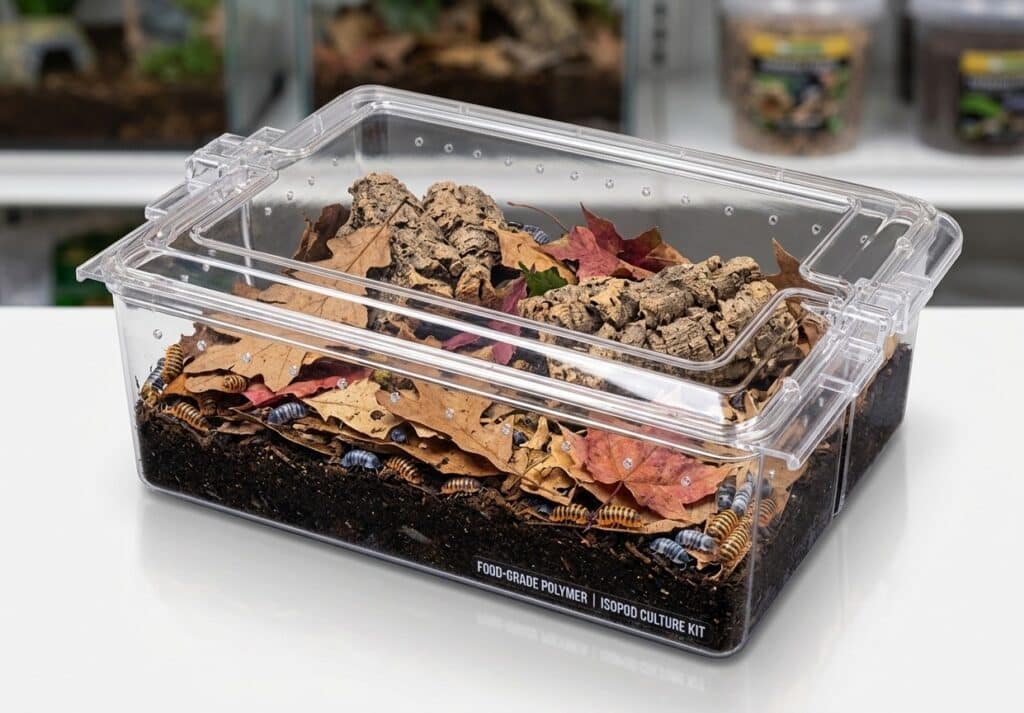
Isopods have gone from terrarium cleanup crew to a product people breed and sell, and that changes what an isopod enclosure needs to do. If you grow isopods to sell, or you keep standout species on display, the container is part of the product. A cheap storage bin holds a colony fine, but it does not show it off or hold up to years of resale use. This guide covers which container fits which job, and why growers and sellers reach for clear, food-grade ones.
Clear, food-grade containers are for growers and sellers, plus keepers who put a colony on display. If you run a casual setup of a colony or two that no one else sees, a basic storage bin is fine and costs less. Once the colony becomes your product, the container becomes part of it.
This is an honest split, not a hard sell. A plain storage shoebox is inexpensive, and hobby guides note that a clear polystyrene enclosure is more than a casual keeper strictly needs. For a grower, the trade is different. You are buying many of the same container, reusing them across batches, and showing stock to buyers, so durability, consistency, and clarity start to pay for themselves.
Where clear, food-grade containers earn their place:
Much of the hobby buys and sells online, where the only thing a buyer sees is a photo. A clear container that shows the colony cleanly in a listing image can be the difference between a sale and a scroll-past.
A good isopod enclosure is a clear, escape-resistant container with smooth walls, a secure lid, ventilation you can add yourself, and enough floor space for substrate and a humidity gradient. The container is the foundation, and everything inside it depends on getting that right.
Whatever you keep, a workable enclosure meets a short list of requirements:
That floor-space point is where isopods differ from many invertebrates. Climbing species like the ones in our look at tarantula enclosure considerations need vertical room. Isopods want ground to roam, burrow into, and graze across, which is why a wide, shallow container often beats a tall tub.
Clarity sells the animal, and a food-grade plastic holds up to the job. A clear container lets a grower watch the colony and lets a buyer see exactly what they are getting, while food-grade polystyrene stays inert and durable through months of damp use and repeated washing. Those qualities are what separate a sale-ready container from a storage tub.
Experienced keepers reach the same conclusion. Terrarium Tribe founder Dan Jones, a former research scientist, favors clear display enclosures because they are “lightweight, affordable, and you can easily see your pets at work.” When you are selling, that visibility does double duty: the container that keeps the colony healthy is also the one that makes it look good.
Pioneer Plastics builds this kind of container. Its clear containers are injection molded from crystal-clear, food-grade polystyrene, they are BPA-free, and they stack cleanly for a uniform shelf. Two of them, the 395C and the 083C, are listed for insect-cage use on the company’s own site, so this is a use case Pioneer Plastics already recognizes.
There is a sourcing argument for growers too. As an ISO 9001:2015 certified, veteran-owned manufacturer based in Dixon, Kentucky, Pioneer Plastics has produced these containers in the USA since 1986. If you are buying many of the same container to grow and sell, that consistency from one unit to the next is the point.
Pioneer Plastics offers clear containers from small isolation cups up to a roughly 6.5-quart display bin. The right one depends on the job: a single morph in a cup, a starter culture in a low round container, or an established colony in the wide 395C.
Here are representative sizes from the clear container line and where each one fits:
| SKU | Interior size | Capacity | Best isopod use |
|---|---|---|---|
| 028C | 3-3/4 x 3-3/4 x 3-1/16 in | 24 oz | Isolation, quarantine, or a single morph cup |
| 180C | 6 in round x 2-1/2 in | 40 oz | Starter culture, low and wide |
| 240C | 8-5/16 in round x 3-1/8 in | 64 oz | A growing culture |
| 195C | 10-5/8 x 7-5/8 x 3-3/4 in | 120 oz (~3.75 qt) | A small, established colony |
| 289C | 7-15/16 in round x 7-1/2 in | 168 oz (~5 qt) | Tall round display jar, or a deeper-substrate colony |
| 395C | 12-1/2 x 10-1/16 x 3-13/16 in | 208 oz (~6.5 qt) | Display colony bin, the largest and widest floor |
A practical note on shape and size. The 395C has the widest floor and is the best single fit for a colony you want on display, since isopods use floor space more than height. The 289C holds a similar volume in a tall round jar: less floor, but it shows a colony from every side and suits species that like deeper substrate. The line tops out around 6.5 quarts, so the largest mature colonies eventually move to bigger totes, while most cultures live comfortably in this range.
For the wide, shallow containers, the low profile is a feature, not a drawback. Isopods spend their time on the floor of the enclosure, so a wide, low container gives them more usable space than a tall tub of the same volume. Keep the substrate layer modest and let leaf litter cover the surface.
Growers, sellers, and shops buy clear containers by the case so every culture looks the same, stacks the same, and restocks at wholesale cost. Buying in volume is how a grow operation keeps its cost per container down, and uniform containers make a colony room or a sales table look organized and professional.
Pioneer Plastics sells its clear containers wholesale, by the case, with case quantities and freight that vary by product. If you only need a single unit to try first, individual containers are available through the company’s Amazon store rather than the wholesale catalog.
Matching containers also make a colony room or sales table easier to run. Identical footprints label cleanly, stack predictably, and let you rotate stock without rearranging the whole shelf.
Shops and resellers can go a step further. Pioneer Plastics runs a wholesale distributor program for retailers, hobby stores, and others who stock and resell containers, which is the route to take if you plan to carry isopod-ready containers as inventory.
To set up an isopod enclosure, add a moisture-retentive substrate, build a damp side and a dry side, provide leaf litter and hides, and add ventilation that keeps the air fresh without drying the container out. Once you have the right container, the rest is quick.
After setup, check moisture every 2 to 3 days and mist the damp side when the sphagnum moss starts to dry out. How often you mist depends on your ventilation and your climate, so let the container tell you rather than spraying on a fixed schedule.
A casual keeper does not. A basic, drilled storage bin keeps isopods well and costs less. Growers and sellers usually choose clear, food-grade containers, since seeing the colony helps them monitor many cultures at once and present stock to buyers.
A roughly 6-quart container works for a starter colony of 10 to 20 isopods. Pioneer Plastics’ largest clear container, the 395C, is about 6.5 quarts with a wide floor, and smaller cups handle isolation and single morphs. Match the container to the colony, not the other way around.
It is best not to. Housing two species together usually ends with one outcompeting the other. Keep each species in its own container, which is why most keepers run several enclosures at once.
Enough to keep the air fresh without drying the container out. A practical starting point is about 10 to 15 small holes on each side, covered with fine mesh. If it dries too fast, cover some holes. If you see persistent condensation or mold, open a few more.
Pioneer Plastics sells its clear containers wholesale, by the case, which suits shops and sellers stocking many of the same container. If you only need one to try, single units are available through the company’s Amazon store.
If you grow or sell isopods, the container is doing more than holding substrate. Clear, food-grade, stackable containers let you monitor the colony, photograph it, and present it like a finished product, batch after batch. Browse Pioneer Plastics’ clear container line to find the sizes that fit your cultures, from isolation cups to a display colony bin.
The information provided in this content is for general informational purposes only and should not be considered professional advice. It is advisable to consult with a qualified industry professional before taking any action based on this information. The team at Pioneer Plastics is here to assist you with any questions you may have.
Injection molding has drastically changed the way everyday items are produced. The process involves melting plastic pellets and injecting them into custom molds to create
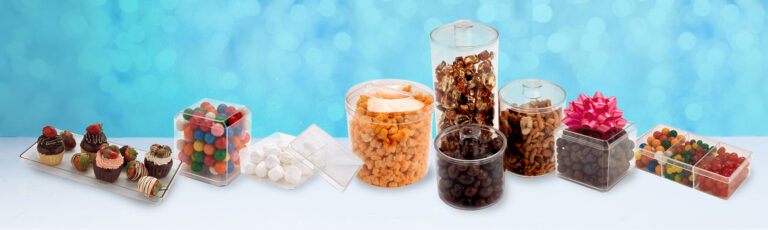
In the visually driven marketplace of the food industry, clear plastic containers are more than just a means to an end; they are a pivotal

Finding the perfect display box for your collectibles is essential for preserving, protecting, and showcasing your treasured items. Whether you are a casual collector or