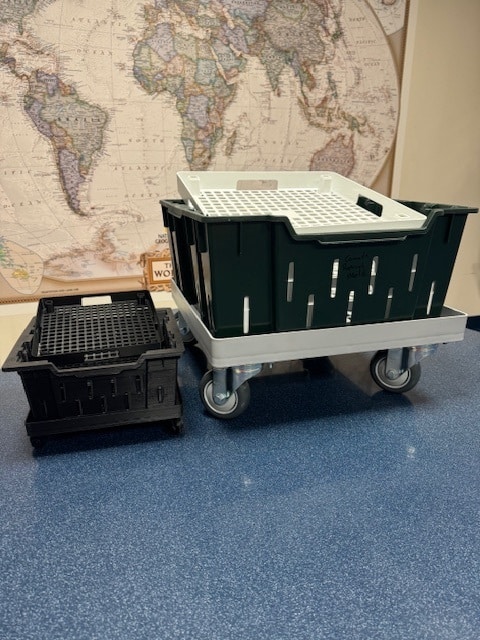
You have already decided to reshore. The harder question is how to actually move an injection molding program from an overseas supplier to a US molder without stalling production or compromising part quality. This playbook breaks the transition into six sequential phases, each with its own decision gate, so you can run a real program against it rather than a list of reasons reshoring is a good idea.
Key Takeaways
- Reshoring an injection molding program runs in six phases: business case, supplier qualification, tool transfer, material requalification, pilot validation, and cutover. Each phase has a go or no-go gate.
- Total landed cost, not unit price, drives the decision. Tariffs, freight, brokerage, carrying costs, and delay risk all belong in the model. US imports of plastic products fell 12.8% in 2025, a direct signal of buyers moving finished-goods production home (Plastics Industry Association).
- A realistic end-to-end timeline typically runs about three to six months. Tool condition and material equivalency are the two variables that most often extend it.
- Confirm mold ownership and recover the full documentation package (CAD files, drawings, mold history) before anything ships. Missing documentation is the most common cause of transfer delays.
- Tariff impact is product-specific, so a buyer has to model their own HTS code and country of origin rather than assume a uniform reshoring tailwind.
- A US molder with ISO 9001:2015 certification, in-house tooling, and a CAGE Code can carry a program from qualification through defense-grade production, which matters when certifications are part of the spec.
Why 2026 Is a Different Reshoring Conversation
Reshoring in 2026 is no longer a speculative trend; it is an active sourcing decision that thousands of US manufacturers have already made. In 2024, 244,000 US manufacturing jobs were announced through reshoring and foreign direct investment, part of more than 2 million jobs announced cumulatively since 2010 (Reshoring Initiative). Tariffs have become a primary driver of that activity rather than a secondary one.
The plastics data tells the same story. US imports of plastic products reached $33.2 billion in 2025, down 12.8% from 2024, while imports of plastics molds rose 7.1% to $1.5 billion, reflecting active tool transfer and domestic tool sourcing (Plastics Industry Association). Buyers are moving finished-goods production home and bringing or rebuilding the tooling to support it.
One caution keeps this honest. Despite US manufacturing investment tripling over the past four years, domestic capacity has grown only about 1.5%, and the Kearney Reshoring Index remains in negative territory at minus 91, improved from minus 115 a year earlier. There is no automatic tailwind. The reshoring wave will not do your program management for you, which is exactly why a phased plan matters.
A note on tariff math: the practical thesis behind this entire playbook is that tariff impacts are uneven, highly product-specific, and deeply influenced by evolving bilateral negotiations, per Plastics Industry Association chief economist Perc Pineda. You cannot assume a blanket rate. You have to model your own part, your own HTS code, and your own country of origin before committing to a move.
Phase 1: Build the Business Case (The “Do We Move” Gate)
Phase 1 decides whether the move is justified on total landed cost, not unit price. The deliverable is a total cost of ownership model and an executive sponsor who owns the project. If the numbers do not clear, the program stops here.
Overseas unit price is almost always lower in isolation. It rarely reflects the full cost of keeping production offshore. A complete business case accounts for the following cost drivers:
- Tariffs and duties: modeled against your specific HTS code and country of origin, not a headline rate.
- Freight and brokerage: ocean freight, customs brokerage, and the volatility that comes with both.
- Inventory carrying cost: the working capital tied up in long pipelines and the safety stock that long lead times force you to hold.
- Delay and disruption risk: the cost of a stockout when a shipment is late, a port is congested, or a supplier goes dark.
- Quality and rework: scrap, returns, and the cost of resolving defects across an ocean and a time zone gap.
Build the model before you talk to molders. The Total Cost of Ownership Estimator from the Reshoring Initiative is a useful starting framework for capturing the cost categories most buyers miss. For the tariff and total-cost context that sits underneath this decision, the foundational reading is Pioneer Plastics’ overview of domestic injection molding tariffs and total cost of ownership, along with the prerequisites covered in reshoring injection molding services.
Gate check: a defensible total landed cost comparison and a named executive sponsor. Without both, do not advance to supplier qualification.
Phase 2: Qualify the US Molder (The “Who” Gate)
Phase 2 confirms that a candidate molder can actually run your part at volume, to spec, with the certifications your program requires. Qualification is a structured evaluation, not a quote comparison. The gate is a single qualified supplier you are confident can take the transfer.
Match Capability to Your Part Specifications
Start with the physical fit between your part and the molder’s floor. The questions that matter most:
- Tonnage range: does the press lineup include the clamp force your part needs, with headroom for larger runs? Confirm the molder’s published machine range covers your shot size and projected volume.
- Material capability: can they run your resin grade, including any engineering-grade or filled materials your part requires?
- Secondary operations: if your part needs welding, hot stamping, pad printing, or assembly, an in-house, single-source molder removes a vendor handoff and a quality risk.
Pioneer Plastics keeps this information public on its facilities and equipment page, which is the level of transparency you want from any candidate before a site visit.
Confirm the Certifications Your Program Requires
Certifications are pass or fail criteria when they are part of the spec. Match the molder’s credentials to your program:
- ISO 9001:2015: the baseline quality management system for most production programs.
- CAGE Code: required for government and defense contract work. A molder with a CAGE Code can take on federal work without a qualification gap.
- ITAR: required when your part falls under defense export controls. Confirm registration before you share controlled drawings.
Pioneer Plastics holds ISO 9001:2015 certification and CAGE Code 3U4K8, and references its government and defense work on its industries served page. For the underlying comparison of US versus overseas mold sourcing that informs this qualification step, see American vs. overseas mold makers.
Verify Capacity, Check References, and Visit the Site
Three confirmations close out qualification. Verify the molder has open capacity on the right presses for your timeline, not just the capability on paper. Check references with buyers who have run similar programs. Then visit the floor in person, because a site visit surfaces issues a spec sheet hides.
Gate check: one molder that fits your part, holds the required certifications, has confirmed capacity, and passed a site visit. That is your transfer partner.
Phase 3: Transfer the Tooling and Protect Your IP (The “Can We Move the Mold” Gate)
Phase 3 moves the mold, or rebuilds it, while protecting your intellectual property. The work is equal parts legal, logistical, and technical. The gate is a mold physically in the new molder’s facility, inspected, and confirmed ready to refurbish or run.
Confirm Mold Ownership Before Anything Ships
Ownership is the first question, and it is not always obvious. Many overseas contracts leave the molder holding the physical tool or the right to retain it. Establish three things before you initiate a transfer:
- Legal ownership of the mold: confirm your contract gives you the right to take possession of the physical tool.
- The full documentation package: recover the latest CAD files, 2D drawings, mold history, maintenance logs, and established process parameters. Missing documentation is the single most common cause of transfer delays.
- An NDA structure: put confidentiality agreements in place with the new molder before you share controlled designs or process data.
If you cannot recover the physical mold, the fallback is rebuilding from your CAD drawings at the US molder. That adds time and tooling cost, but it eliminates the risk of relying on a supplier you are leaving. A molder with in-house tool development and management can handle either path: accepting and refurbishing a transferred tool, or building a new one from your design.
Handle Shipping, Customs, and Arrival Inspection
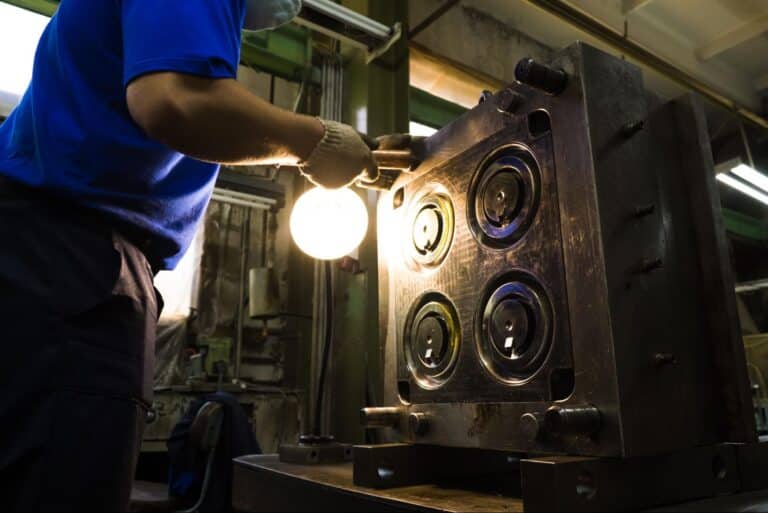
Once ownership and documentation are settled, the physical move begins. Plan for international freight and customs clearance on the tool itself, then inspect the mold on arrival for wear, damage, and completeness against the documentation package. Define the refurbishment scope before the first trial shot.
This is the phase where a single chapter of the playbook becomes a project of its own. For the detailed mechanics of a clean transfer, including the documentation package and the cost drivers, the OEM’s playbook for successful tooling transfers goes deeper than this section can.
Gate check: the mold is in the new facility, inspected, and the refurbishment scope is defined. Or a new tool build is underway against confirmed CAD.
Phase 4: Requalify Material and Run First Article Inspection (The “Does It Still Meet Spec” Gate)
Phase 4 proves the part still meets specification when produced on US equipment with US-available material. The two variables here, resin equivalency and dimensional conformance, are also the variables most likely to extend a reshoring timeline. The gate is a documented first article that conforms to drawings.
Run a Resin Equivalency Analysis
Overseas-spec resin grades do not always have an identical US-available equivalent. A resin equivalency analysis confirms that the material your new molder can source matches the mechanical, thermal, and regulatory properties your part requires. Where an exact match does not exist, your molder’s engineering team identifies the closest qualified substitute and documents the change.
This is engineering work, not procurement. A molder with in-house engineering services can run the equivalency analysis, recommend a qualified grade, and validate it through trial shots rather than leaving you to manage a material change across suppliers.
Complete First Article Inspection and PPAP-Style Documentation
First article inspection is the formal check that the first parts off the transferred or rebuilt tool conform to the drawing. The sequence is consistent across programs:
- Trial shots: initial parts produced to dial in the process on the new press.
- Dimensional inspection: measurement of critical dimensions against the 2D drawings and tolerances.
- Documentation: a PPAP-style package that records the process, the measurements, and any approved deviations, so the part is auditable.
Gate check: a documented first article that meets drawing requirements on qualified material. If dimensions or material properties miss, this is the phase to resolve them, before pilot production.
Phase 5: Run the Pilot and Validate Production (The “Is It Production-Ready” Gate)
Phase 5 confirms the program holds up under real production conditions, not just a first article. The deliverable is a validated, repeatable process. The gate is a controlled production run that meets quality and scrap targets.
A pilot run is a limited production batch run under normal conditions to validate consistency. Four checks define a passing pilot:
- Statistical process control: monitor critical dimensions across the run to confirm the process stays in control, not just that the first parts measured well.
- Scrap-rate validation: confirm the scrap rate is at or below target and stable across the batch.
- Packaging and labeling sign-off: validate that finished parts are packaged and labeled to your downstream requirements.
- Repeatability: confirm the process produces the same result run to run, which is the real test of production readiness.
Gate check: a controlled production run that holds critical dimensions in control and meets the scrap target. A pilot that passes once but is not repeatable has not passed.
Phase 6: Cut Over and Ramp Production (The “Go” Gate)
Phase 6 switches live production from the overseas supplier to the US molder without a supply gap. The deliverable is an inventory bridge and a communication plan. The gate is steady-state US production with the overseas relationship cleanly closed or held as a backup.
Build the Inventory Bridge
The cutover risk is a gap between the last overseas lot and the first qualified US lot. Bridge it by sizing a safety-stock buffer from the final overseas production run that covers the US ramp period, including any requalification or pilot rework. Sequence the final overseas order and the first US order so the buffer never runs dry.
Communicate the Change and Plan Your Sourcing Strategy
A cutover is a stakeholder event, not just a logistics event. Two decisions close out the program:
- Communication plan: notify internal stakeholders and any downstream customers of the source change, including any documentation or re-approval they require.
- Sourcing strategy: decide between a full reshore to the single US molder or a dual-source model that keeps a second supplier qualified for resilience. Both are valid; the choice depends on your risk tolerance and volume.
Gate check: steady-state US production at target quality and volume, an inventory bridge that held through the ramp, and a documented sourcing decision going forward.
How Long Does Reshoring Injection Molding Actually Take
A realistic end-to-end reshoring timeline typically runs about three to six months from supplier selection to first production run. The two variables that most often extend it are tool condition and material equivalency. A tool that arrives in poor shape adds refurbishment time in Phase 3, and a resin without a clean US equivalent adds analysis and trial time in Phase 4.
The phases are sequential because each one depends on the prior gate. You cannot transfer a tool you do not own, requalify material on a tool that has not arrived, or cut over before a pilot passes. Building slack into the two high-variance phases is the single most effective way to keep the program on schedule.
Frequently Asked Questions About Reshoring Injection Molding
What is the process of reshoring an injection molding program?
Reshoring an injection molding program runs in six sequential phases: building the total cost of ownership business case, qualifying a US molder, transferring or rebuilding the tooling, requalifying material and running first article inspection, validating a pilot production run, and cutting over to steady-state US production. Each phase ends in a go or no-go gate, and each depends on the phase before it.
How long does it take to move injection molding from China to the US?
Most programs run about three to six months from supplier selection to first production run. The timeline stretches when a transferred tool needs significant refurbishment or when the overseas resin grade has no clean US-available equivalent and requires additional material analysis and trials. Sizing an inventory buffer from the final overseas run protects you during the ramp.
Who owns the mold when transferring tooling from an overseas supplier?
Ownership depends on your contract, so confirm it before you initiate a transfer. Many overseas agreements leave the physical tool or its retention rights with the molder. If you own the mold, recover it along with the full documentation package. If you cannot, a US molder with in-house tooling capability can rebuild the tool from your CAD drawings.
Will overseas tooling run on a US injection molding press?
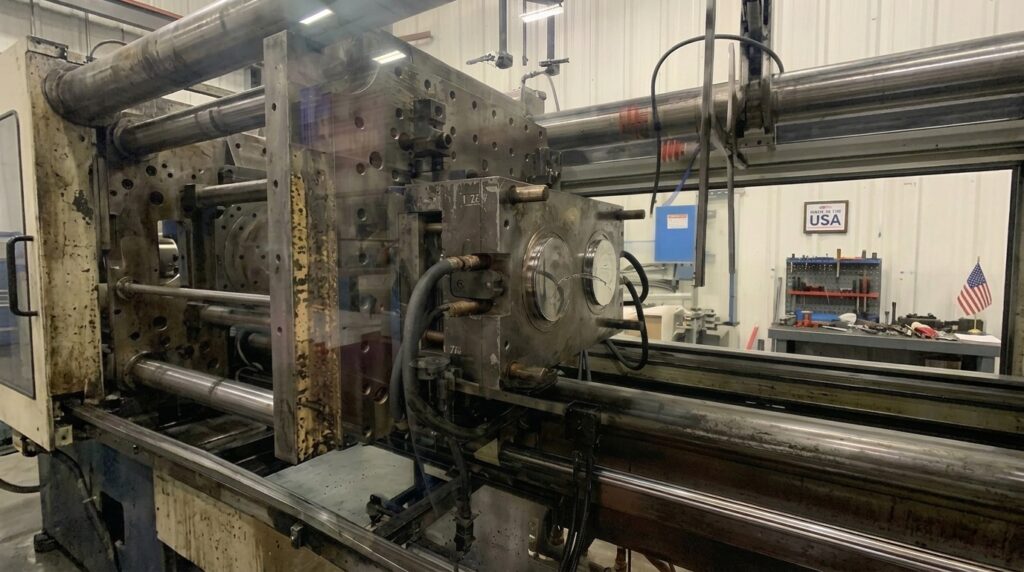
Often yes, but it has to be inspected and confirmed before you count on it. On arrival, the molder checks the tool for wear, damage, and compatibility with their presses, then defines a refurbishment scope. Tools missing documentation or in poor condition may need rework or, in some cases, a rebuild, which is why mold condition is one of the two biggest timeline variables.
Is reshoring injection molding cost-effective once tariffs and total landed cost are included?
It frequently is, but only your own numbers can confirm it. Overseas unit price usually looks lower until you add tariffs, freight, brokerage, inventory carrying cost, and delay risk into a total cost of ownership model. Because tariff impact is product-specific, you have to model your own part and HTS code rather than rely on a general rate. US imports of plastic products fell 12.8% in 2025, which suggests many buyers are reaching the same conclusion.
What does first article inspection mean when reshoring a part?
First article inspection is the formal verification that the first parts produced on the transferred or rebuilt tool conform to your drawings. It includes trial shots, dimensional measurement of critical features against tolerances, and PPAP-style documentation that makes the part auditable. A molder with an in-house engineering team runs this step as part of requalification, before pilot production.
Move Your Program With a Partner Who Has Done It Before
Reshoring succeeds when each phase is run against a real plan and a molder who can carry the program from qualification through production. Pioneer Plastics is a veteran-owned, family-owned US injection molder with over 40 years of experience, ISO 9001:2015 certification, CAGE Code 3U4K8, and in-house tooling and engineering. To start mapping your transition or pressure-test your business case, request a quote from Pioneer Plastics’ custom injection molding team and get a realistic timeline up front. You can also reach the team directly through the contact page.