

Sports Memorabilia Preservation: Protect Your Collection
Collecting sports memorabilia isn’t just a hobby—it’s a passion that connects us to unforgettable moments in sports history. Whether it’s a signed baseball or a treasured
DISCOVER OUR NEWLY RELEASED COLLECTIBLE DISPLAY CASES! SHOP NOW
Shop by brand & type
UV-filtering display cases that guard collectibles, documents, and retail goods against sun damage and discoloration.
Browse UV-protected cases →Display cases packaged for retail shelves — clamshell, boxed, and custom-printed options ready to scan and sell.
Browse retail-ready cases →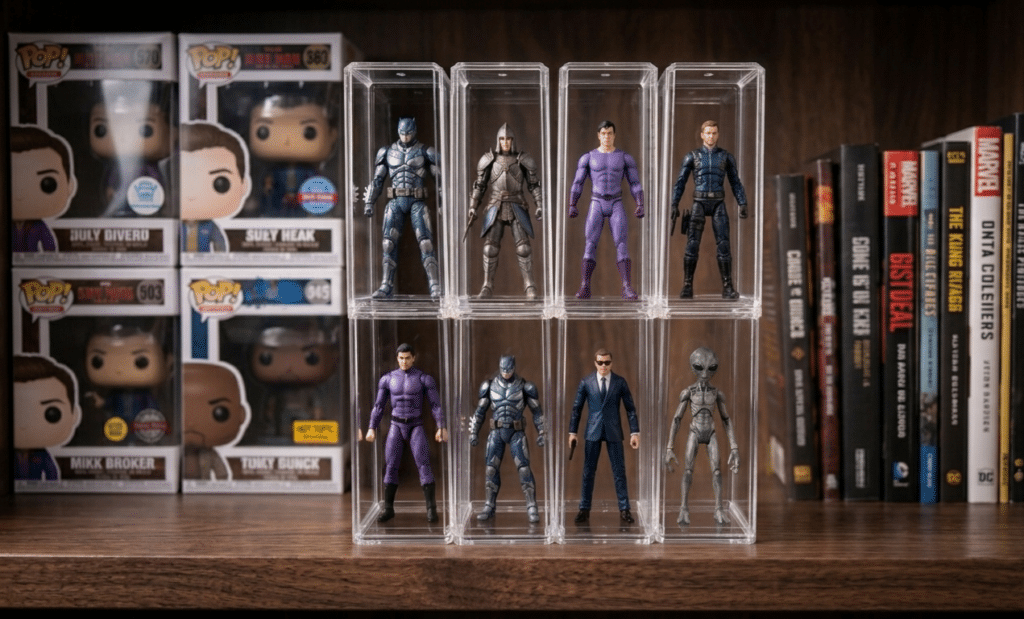
Whether you’re protecting a mint-on-card vintage Star Wars figure or displaying a shelf full of 3.75″ classics, the action figure display cases you choose will determine how well your collection holds up over time. Dust, handling damage, and faded packaging are preventable — but only if the case actually fits the figure and the job. This guide covers what matters when choosing a case: material, sizing, UV reality, and stackability.
A well-fitted display case protects your figures from the three main threats to long-term condition: dust accumulation, contact damage, and packaging degradation. For a collector, any one of these can diminish both display quality and long-term value.
A case creates a controlled microenvironment around your figure — limiting exposure to airborne particulates, reducing casual handling by guests and family members, and providing a physical buffer against the minor bumps and jostles that gradually wear on loose figures over time.
The U.S. action figure market was valued at $3.06 billion in 2024 and is growing at 6.4% annually, driven in large part by adult collectors who treat their collections as a serious hobby. More than 35 million collectible action figures were sold in North America in 2024 alone. The right case is the simplest form of protection available for an investment of that scale.
Clear polystyrene is the right material for most individual action figure cases. It delivers excellent optical clarity, resists yellowing with proper care, stacks safely, and costs significantly less than acrylic at comparable quality levels.
Here’s how the three common materials compare:
For collectors managing a collection of any size, polystyrene offers the right combination of quality, clarity, and practicality. If you’re a retailer or distributor evaluating display cases as a procurement decision, our guide to wholesale display case procurement for distributors covers bulk ordering, cost-per-unit considerations, and sourcing logistics.
A case that doesn’t fit your figure isn’t a display solution. Interior dimensions are the variable that matters most, and they’re rarely listed prominently on case packaging. Verify them before you buy.
For 3.75″–4″ scale figures — the most common vintage and modern collector scale, including Star Wars, G.I. Joe, and similar 1:18 lines — Pioneer Plastics’ action figure display cases have interior dimensions of 1 ⅞” × 1 ⅜” × 4 ⅜” tall, fitted precisely for these figures without wasted space or pressure points.
Standard clear plastic cases do not block UV light. This is worth stating plainly, because marketing language around display cases often implies more UV protection than standard materials actually deliver.
What a standard plastic case does protect against is contact damage, dust, and handling — all meaningful forms of protection for most display environments. But if UV exposure is a real concern for your collection, there are two practical options:
For most shelf displays in interior rooms without direct sun exposure, a standard clear polystyrene case provides adequate protection. Collectors with irreplaceable figures near windows, or with concerns about long-term fading, should consider the UV-protection option.
Stackable case design matters more as a collection grows. Pioneer Plastics’ one-piece polystyrene cases stack cleanly without shifting or overloading the cases below — the flat base provides a stable contact point and the case geometry distributes weight evenly.
For collectors buying in quantity, the practical benefit is straightforward: vertical stacking makes efficient use of shelf space and lets you display more figures in the same footprint. The clear base option keeps the figure visible from below; the black base creates a cleaner visual frame that suits more neutral display setups.
One-piece construction is also worth noting on its own terms. Cases with a separate base and dome introduce failure points where dust can infiltrate at the seam and where pieces can separate during handling. A single molded enclosure eliminates both issues. For the full range of Pioneer Plastics’ case styles beyond action figures, the complete display case collection covers model cars, sports memorabilia, diecast items, and more.
For 3.75″–4″ scale figures, you need a case with interior dimensions snugly matched to the figure without excess headroom. Pioneer Plastics’ cases for this scale have interior dimensions of 1 ⅞” × 1 ⅜” × 4 ⅜” tall, designed for vintage and modern figures in 1:18 scale, including Star Wars, G.I. Joe, and similar lines.
Acrylic and polystyrene are both clear plastics, but they differ in cost, weight, and availability in the small case sizes collectors need. Polystyrene is lighter, less expensive, and more commonly manufactured in individual figure case formats. Acrylic is slightly harder and more scratch-resistant in some formulations but typically costs more per unit. For most collectors, polystyrene offers the better combination of clarity, practicality, and value.
Standard clear plastic cases do not filter UV light effectively. For collectors with real concern about UV-related fading, UV-protection cases with treated materials offer better long-term results. As a baseline for any collection, keeping figures out of direct sunlight is the single most effective UV prevention step, regardless of case material.
Use a properly fitted display case that protects the figure from dust, handling, and UV exposure. Keep the display away from direct sunlight and high-humidity environments. Handle figures by the base rather than the figure itself when moving or repositioning them. The case does most of the work — but placement and handling habits matter just as much over the long term.
Use a soft microfiber cloth — never paper towels, which are abrasive enough to leave fine scratches in clear polystyrene. For dust, a dry wipe is usually sufficient. For smudges or fingerprints, dampen the cloth lightly with water and wipe gently. Avoid ammonia-based cleaners like Windex, which can cloud or craze clear plastic over time. Dry with a second clean microfiber cloth rather than letting the case air dry, which can leave water spots.
Yes. Pioneer Plastics’ action figure cases are sold by the carton (208 units per carton) for retailers, hobby stores, trophy shops, and distributors. Individual units are available through Pioneer Plastics’ Amazon store. Retailers and distributors interested in bulk pricing can find program details through the Pioneer Plastics distributor program.
Your collection represents real investment — financial, personal, and historical. A well-chosen display case protects it one figure at a time, from the first figure on the shelf to the hundred and first.
Browse Pioneer Plastics’ full line of action figure display cases and find the case that fits your scale and your setup. Pioneer Plastics has been manufacturing plastic display solutions in the USA for over 40 years — and the cases are built to show for it.
The information provided in this content is for general informational purposes only and should not be considered professional advice. It is advisable to consult with a qualified industry professional before taking any action based on this information. The team at Pioneer Plastics is here to assist you with any questions you may have.
Collecting sports memorabilia isn’t just a hobby—it’s a passion that connects us to unforgettable moments in sports history. Whether it’s a signed baseball or a treasured

In the visually driven marketplace of the food industry, clear plastic containers are more than just a means to an end; they are a pivotal

Finding the perfect display box for your collectibles is essential for preserving, protecting, and showcasing your treasured items. Whether you are a casual collector or